The Society’s newsletter, At Mother’s Knee, is produced at least once annually and often contains brief articles researched and written by our members. Below are some of the articles published to date.
Inaugural edition – Summer 2019
COLONIAL MOTHERS – DAUGHTERS OF LIBERTY
AND OTHERS ENGAGED IN
THE POLITICAL RULES OF TEA,
HOMESPUN YARN, AND JEWELS
Carla Whitehurst Odom
Recently members of several national, state, and local organizations have had opportunity to read about Early Heroines of America’s Defense. Sarah Winston Woodson of the Virginia Colony and Hannah Emerson Duston of the Massachusetts Bay Colony distinguished themselves in acts of heroism against hostile Native Americans. Shortly prior to the Revolution, a number of ladies stepped forward to serve in other roles. The Daughters of Liberty were organized in 1765. They encouraged boycotting English goods and supported the weaving of homespun cloth. In Newport, RI, 92 women produced 270 skeins of yarn. Homespun substituted for British textiles that were taxed. Patriots began drinking “Liberty Tea” brewed from fruit leaves and other substitutes for the English tea.
During the well-known Boston Tea Party in December 1773, inhabitants of the town tossed into the harbor chests of tea that were the property of the East India Tea Company. Some of the citizens were disguised as Indians due to the vision of Sarah Bradley Fulton who was dubbed “Mother of the Boston Tea Party.” Elizabeth Nicholas Dyar mixed and applied the paint to the faces and hands of the men. Both ladies were members of the Daughters of Liberty.
The Boston Tea Party was held to protest British taxes that were imposed without American representation. In retaliation, the English Parliament ordered the close of the Boston port. Restrictions were levied on the Colonists to no longer self govern. In response to the hardships thrust upon the city of Boston and other actions, the North Carolina Assembly boycotted all British products. The colony sent corn, flour, and pork to aid the “distressed inhabitants of Boston.” In 1774 and early 1775, Philadelphia, Chestertown, and Annapolis held tea parties. New York and Charleston both participated in two events. Lexington, Provincetown, Dorchester, Princeton, Yorktown, and Cambridge each had similar activities in response to the unfair taxes. John Adams said they were “revolutionary tea parties.” It may be speculated that during such uncertain days, many Colonial Mothers remained even more watchful while occupied by their normal duties of family and domestic tasks.
In the Colony of North Carolina at two different sites and dates, some ladies – presumably many of whom were mothers – were instigators of protests against the English. October 25, 1774, is remembered as the date of the first confirmed organized female revolt in the American colonies. Members of the Edenton Ladies Patriotic Guild, led by Mrs. Penelope Barker, held a special Tea Party to boycott British tea. Mrs. Elizabeth King opened her large house to host the 51 participants. Earlier similar events had been conducted by gentlemen disguised as Indians. These women attended without disguise and signed their names to a statement received by London newspapers. Barker, King, and the Edenton ladies placed their own and their families’ lives and fortunes in harm’s way.
A less-published but more-incendiary event took place around February 14, 1775. A loyal well-born Scottish lady named Janet Schaw was visiting family in the Cape Fear region and was a witness to the Wilmington Tea Party. She had already criticized North Carolina for closing its port to British shipping. Ladies of the town not only opposed British policies, but they vowed not to buy tea. Their personal stores were ceremonially burned at the town square.
Some Virginia mothers gave their jewelry in support of the Continental Congress as reported in Purdie’s Virginia Gazette. Across the Colonies, women were moving to affirm the cause of the upcoming Revolution by protesting taxes, gifts, some of them sacrificial in nature, spinning homespun yarn, and making other valuable contributions. An anonymous female author wrote a letter urging the citizens to adopt a spirit of willingness to provide for the upcoming conflict. Soon many of these same mothers would be sending their loved ones off to fight for freedom against Great Britain.
Bibliography
Joseph Cummins, Ten Tea Parties’ Patriotic Protests that History Forgot (2012).
Dr. Troy L. Kickler, “When Wilmington Threw a Party: Women and Political Awareness in Revolution-Era North Carolina,” at http://www.northcarolinahistory.org/commentary/ (accessed 2021).
Troy L. Kickler, “Wilmington Tea Party,” at http://www.northcarolinahistory/org/encyclopedia/ (accessed 2021).
Carla Whitehurst Odom, “Early Heroines of American Defense,” in Noblesse Oblige (a publication of the National Society of the Dames of the Court of Honor), 8:2 (Spring/Summer 2016).
William S. Powell, North Carolina Through Four Centuries (1989).
Virginia Gazette, Williamsburg, VA, May 3, 1775, and January 13, 1776.
Barbara Wells Sarudy, “Women in American History,” blog at womeninamericanhistory18. blogspot.com2017/11/women-tea-parties-american-revolution.html (accessed 2021).
Evangeline Walker Andrews, Journal of a Lady of Quality: Narrative of a Journal from Scotland to the West Indies, North Carolina and Portugal in the Years 1774-1776 (1923).
Summer 2020
COLONIAL HERB GARDENS
Carla Whitehurst Odom
Family gardens graced both the rural areas and towns. The first Colonial gardens with herbs were primarily kitchen gardens tended with orchards, vegetables, grains, and in some locations flowers brightened up the view. Later, as the colonists’ wealth increased, separate gardens were added to grow only flowers for pleasure, such as Thomas Jefferson’s flower walk at Monticello or the formal beds at Mount Vernon, George Washington’s home, and at Colonial Williamsburg. Some invasive herbs revealed in time the wisdom of utilizing pots or borders of bricks or stones to keep roots in the designated area. Mint remains especially invasive. Experience has proven mint confined in large pots will eventually grow through the drainage holes and invade neighboring turf. These pots should be kept out of the regular soil of a herb garden.
For Greater Health and Wealth
Herbs served many purposes, certainly for flavor, increased immune system health, and healing. Meat comprised of farm animals and wild game was the primary diet staple. The flavor of herbs coupled with natural vitamins added to the protein. Herbs and other plants also brightened wardrobes. According to Laura Viancour,
“Colonial Williamsburg’s manager of garden programs, identifies tansy, parsley, madder, walnut and bayberry as just a few of the many plants used to create dyes that would change last year’s frock into this year’s fashion for the frugal Colonial woman.”
This author has used tea leaves heated in a large pot filled with liquid brought and kept to a gentle boiling pot, and stirred often to achieve a more vibrant mocha cream from white fabric. Certainly modern day washing techniques remove much of the natural dyes.
Meet the Colonial Garden
Our ancestors learned to consider a location facing south for the family herb garden, one that had protected sides from animals and when possible also wind shear in order to take advantage of sunlight and a slightly longer growing season. In the book, Dooryard Garden: Colonial Herbs, New England Herb Society of America, members Jane O’Sullivan and Rhonda Haavisto write that most New England colonial gardeners situated their gardens on a southern exposure for reasons already stated. What would you find growing in the Colonial herb garden? The following basic and multitasking herbs will work just as hard today as they did in the Colonial home, making them useful and beautiful additions.
Parsley (Petroselinum crispum) in Colonial times, cooks seasoned food with parsley and prized the herb as a health tonic. The high vitamin C properties aided in prevention of scurvy. For culinary purposes a little parsley went a long way, so for most home gardens, one plant provided sufficient fresh parsley for an average family to enjoy in the growing season as well as for drying and storing. It was also used as a dye to achieve a clear shade of green. Parsley was first found in the Mediterranean area. Possibly French immigrants introduced it to the New World. In most regions of what is the USA today it is necessary to bring parsley indoors during the winter months, or to cultivate new seedlings annually.
Sage (Salvia officinalis) enhanced the flavor of game meats and stews, two staples of the era. Sage was also used historically as a medicinal herb. “Sage has known antimicrobial properties and it is anti-inflammatory,” says Keri Marshall, N.D., medical director at Gaia Herbs. Marshall confirmed a controlled clinical study using a placebo, double-blind methodology indicated a commercial throat spray made with sage was effective in treating acute viral pharyngitis, thus giving an intriguing glimpse into research that backs up Colonial beliefs.
Rosemary remains a popular herb that flourishes at least from southeast Virginia south. In a mature state it can be pruned sometimes into a single trunk that will over the years become gnarled to imitate a dwarf tree appearance. Care must be made to keep the top heavy herb tethered from ice and wind storms. It has been used as a natural preservative to increase the shelf life of perishable foods and also to flavor sea foods and other meats. In the Middle Ages Rosemary was included in funeral arrangements thus earning the reputation as a herb of mourning. The antioxidant and anti inflammatory properties are often found in traditional medicine for the benefits of antibacterial and wound healing aids. Other claims include lowering blood sugar, reputed to improve mood and memory, protection of vision, eye and heart health, digestion, weight loss, and hair growth.
Thyme is a member of the mint family. It is believed effective when made into a tincture to treat acne, This herb has also been recognized to aid in natural treatment of high blood pressure. It is doubtful our colonial mothers knew these modern facts, but thyme was and can be used to disinfect, and combat insects, It flavors many protein foods with tiny springs added to taste. At the outset it is likely the French ancestors were more familiar with Thyme than northern European immigrants to America.
Dried herbs shared by First Vice President General Ann Scott Garner
Other herbs useful for headaches, pain and/or stress relief:
1). Allspice is an analgesic, which means it has a numbing effect on the nerves and gives relief from pains such as headaches and sinus problems. It is also a relaxant, and has a calming effect.
2). Borage is known for its soothing properties. It aids the body to cope with stress and nervous tension making it a valuable ally in treatment for tension headaches.
3). Catnip is a sedative that helps relaxes and relieves stress symptoms. It is child safe and friendly. This herb will help as a pain reliever for headaches and can even mitigate migraines, though a strong infusion is needed in order to fully relieve a migraine.
4). Chamomile is a well-recognized remedy for stress, nerves, and anxiety. It is safe for children. Chamomile has an anti-inflammatory effect on the body, helping with certain types of headaches.
5). Feverfew is a famous remedy for migraines and headaches. It has a calming effect and helps reduce stress with the added benefit of reducing the amount of migraines some sufferers incur. This herb is best used as a preventative for bad headaches or migraines. Ingest it daily either the leaves raw, in a salad, in a piece of bread, in tea, in tincture form, etc.
6). Horseradish serves as a nasal and sinus decongestant in suffering from sinus headaches. The raw leaves are supposedly an analgesic, and if the leaves are pressed on the forehead, they help numb headache pain. In addition, ingest some juice or sauce made with horseradish often cause sinus symptoms vanish. Just chopping the horseradish helps draw out clogged sinuses. Note it is essential in shrimp cocktail sauce although not one of the secret ingredients of the family shrimp cocktail sauce.
7). Lavender promotes relaxation, eases anxiety and increases calmness. It is an aid for stress-related headaches. Massaging lavender essential oil on one’s forehead often eases headaches.
8). Lemon Balm: is good for tension and anxiety-type headaches. It promotes calming and also serves as a mild sedative.
9). Lemon Verbena is a calming herb, excellent for relaxing and aiding nerves and anxiety. It is high in Vitamin C.
10). Passionflower is an effective sedative that helps offset nervousness or anxiety. It serves as a mild pain reliever.
11). Rosemary, listed earlier, is a stimulant to the nerves and it improves circulation. This herb is a good tactic for cluster headaches. An ingestion of rosemary tea/infusion is recommended for consideration.
12). Sage, also listed above, is effective for cluster headaches. Sage has been useful to combat the fullness of consuming too much food at once. It is also good for hormonally caused headaches, especially those from menopause.
13). Skullcap is relaxing and has antispasmodic properties. It is an excellent remedy for anxiety/stress/tension headaches because it contains properties of a mild sedative.
From ancient days herbs have provided healing, flavor and beauty, colonial mothers depending on them. As late as the early 20th century this author’s great grandmother prepared herb treatments for the family. The oldest children were sent off to “Vickers’ Wood” to collect certain plants. Decades later it was a privilege to design and cultivate a reputable herb garden at our Virginia House. In Carolina only a few basic herbs grow side by side with ornamental shrubbery “just outside the door.” Antique canning jars are used to keep the dried harvest from each summer usually for up to two years in reserve. Dalcassian stews and many other staples are flavored with homegrown herbs. Be encouraged to research healing plants. If land is not available for a garden a window sill facing the sun will hold a few small herb pots to add interest and variety to herbs bought at the market. Over time one’s pallet will note the different in fresh and dried and certainly in commercially packaged herbs. There is a certain satisfaction in growing some of what you consume, even it is just the herbs that flavor one’s food and tea.
Bibliography
Graham A. Pavey, Start to Plant Herb Gardens (1996).
Jane O’Sullivan and Rhoda Haavisto, Dooryard Garden: Colonial Herbs, North American Herb Society of America, at www.neuhsa.org/dooryard.html (accessed 2020).
“Herbs for Headaches” at www.thehomesteadgarden.com/ (accessed 2020).
“Ten Healthy Herbs and Spices” and “Rosemary Tea: High in Antioxidant, Antimicrobial, and Anti-inflammatory Compounds” at www.healthline.com/ nutrition (accessed 2020).
Experience Life Magazine (generally) at https://experiencelife.lifetime.life/ (accessed 2020).
Winter 2026
ELIZA LUCAS PINCKNEY
Eliza Lucas was born in Colonial British Antigua 28 Dec 1722 to George Lucas (Lt. Gov. of the Island) and his wife, Ann Lucas. At the age of 10 she was sent to England to study literature, writing, and music in preparation for marriage. While there, she became interested in botany, which influenced her life and inspired her work.
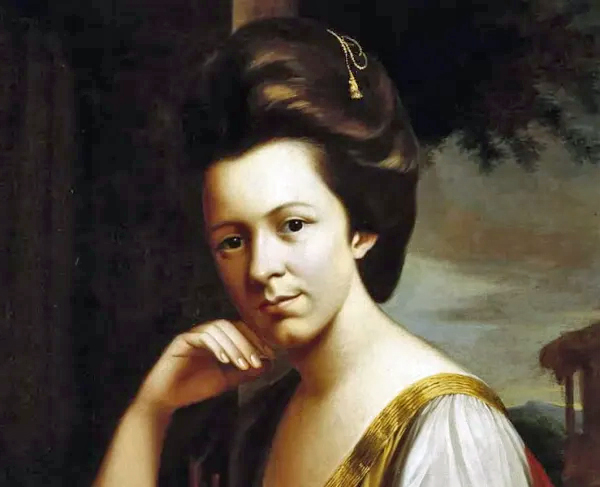
In 1738, Colonel Lucas moved his family to the Charleston area of South Carolina. Unfortunately, Ann Lucas died shortly after the trip. About that time, Colonel Lucas was called back to Antigua for political reasons, leaving Eliza, as the eldest child, to manage the family plantation and the enslaved workers. By the time she was 19, she had planted a large fig orchard and had plans to dry and export them. In addition, she experimented with seeds her father sent her from the Caribbean. She planted many oak trees because she felt, with the tension between England and Spain, they would become valuable when ships were needed to be built.
Indigo was coveted by the British Empire, and Eliza was especially interested in perfecting the crop in South Carolina, as opposed to where it was usually grown – East Asia. In 1744, she was able to produce enough indigo to begin the process of dye production. Her father sent her a Frenchman from Monserrat to help her produce the blue dye. She sent a small sample of indigo dye to Great Britain, where it was a success. As she was getting ready to grow the crop on a larger scale, she got word that her father wanted the family to join him in Antigua.
Eliza had become good friends with her neighbors, Charles and Elizabeth Lamb Pinckney. About the same time her father wanted her to move, Elizabeth Pinckney died. Charles Pinckney, age 45, proposed to Eliza, age 21. Charles had no children by his first marriage, but he and Eliza had four children together. Her oldest son, Charles Cotesworth Pinckney was a signer of the U.S. Constitution, and her youngest son, Thomas Pinckney was a diplomat and statesman. Eliza continued working on the plantation while raising her family. In 1758 Charles contracted malaria and died. Eliza remained a widow and continued to manage the plantation. Indigo could be grown on land not suited for rice, so planters and farmers already committed to plantation agriculture did not have to reconfigure their land and labor. She experimented with other crops and products, such as silk, to create more income for her family. Eliza is credited with perfecting the growth of indigo as a major cash crop in South Carolina.
In her 70s, Eliza developed breast cancer. Her family made the decision to take her to Philadelphia to receive the most up-to-date medical treatment. She passed away May 27, 1793, at the age of 71, and is buried in St. Peter’s Churchyard in Philadelphia, Pennsylvania. George Washington, by his own request, was a pallbearer at her funeral.
In 1989, Eliza Lucas Pinckney was the first woman inducted into the South Carolina Business Hall of Fame, and in 2008 she was inducted in the South Carolina Hall of Fame.
[Story credit: National Park Service web site and from the U.S. National Park Service web site. Image credit: American Battlefield Trust, at http://www.battlefields.org/learn/biographies/eliza-lucas-pinckney.]
NANCY MORGAN HART
Nancy Morgan Hart was a cousin of General Daniel Morgan and a patriot spy in the backcountry of the Broad River Valley of Georgia. She is believed to have been born in North Caolina about 1741 in the Yadkin River Valley, where she married Benjamin Hart, though some researchers think she was born in Pennsylvania or New York state. During the early 1770s, Nancy, Benjamin, and their family left North Carolina and migrated to Georgia, settling in the fertile Broad River Valley of the northeast Piedmont area. Nancy was said to have a feisty personal demeanor characterized by a hotheaded temper, a fearless spirit, and a penchant for exacting vengeance upon those who offended her or harmed her family and friends. Many remembered that she, rather than her husband, ran the Hart household. They had a total of six sons and two daughters.
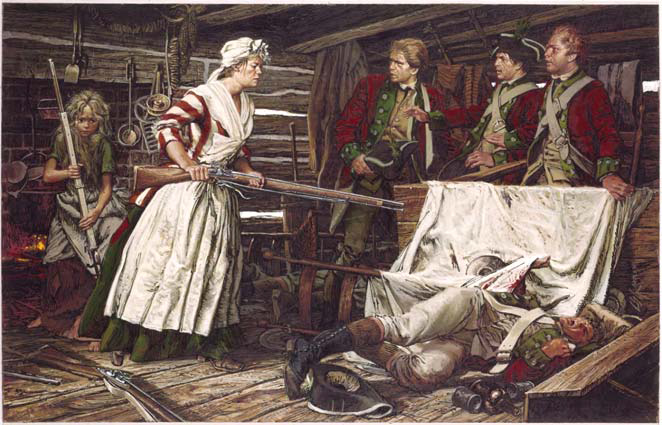
According to legend, a group of five or six British soldiers came to Nancy’s home in 1779 to question her about assisting an escaped Patriot. When they demanded food and drink, Nancy obliged with unusual hospitality, all the while discreetly removing the soldiers’ muskets from the stack they had formed in a corner. Nancy had passed two of the guns to her 12-year-old daughter, Sukey, through a gap in the wall before the soldiers noticed. She then instructed the soldiers to remain where they were. When one rose to approach her, she shot him dead, wounded another, and took the remaining four hostage.
Sukey ran to tell her father, who returned to the cabin. The Harts and their neighbors decided to hang the soldiers from a nearby tree. In 1912, an archaeological excavation of the land near the Harts’ cabin unearthed six skeletons, suggesting that some version of myth was true.
Another legend says Nancy Hart acted as a sniper, killing Tories as they came across the Broad River. A relative of the Harts said that one time during the war, Nancy was cooking lye soap in her cabin when her daughter discovered a spy looking through a crack in the wall. Hart threw a ladle of the boiling soap into the spy’s eyes, went outside, and tied him up before turning him over to the local Patriot militia.
During the late 1780s the Harts moved to Brunswick, Georgia. (Some accounts also suggest they may have spent time in Alabama and South Carolina as well.) Benjamin Hart died shortly thereafter, and Nancy settled with her son, John Hart, and his family along the Oconee River in Clarke County near Athens, Georgia. Around 1803, John Hart took his mother and family to Henderson County, Kentucky, where they settled near relatives. Nancy spent the remaining years of her life there. She was buried in the Hart family cemetery a few miles outside of Henderson.
[Story credit: Hallowed Ground, a publication of the American Battlefield Trust (Winter 2024-2025), p. 29; and see wikipedia, sub “Nancy Hart.” Image credit: www.georgiaencyclopedia.org/articles/history-archaeology/nancy-hart-ca-1735-1830/, courtesy of National Geographic.]

